Rome, Lazio
Pasta Carbonara
The iconic Roman pasta made entirely without heavy cream.
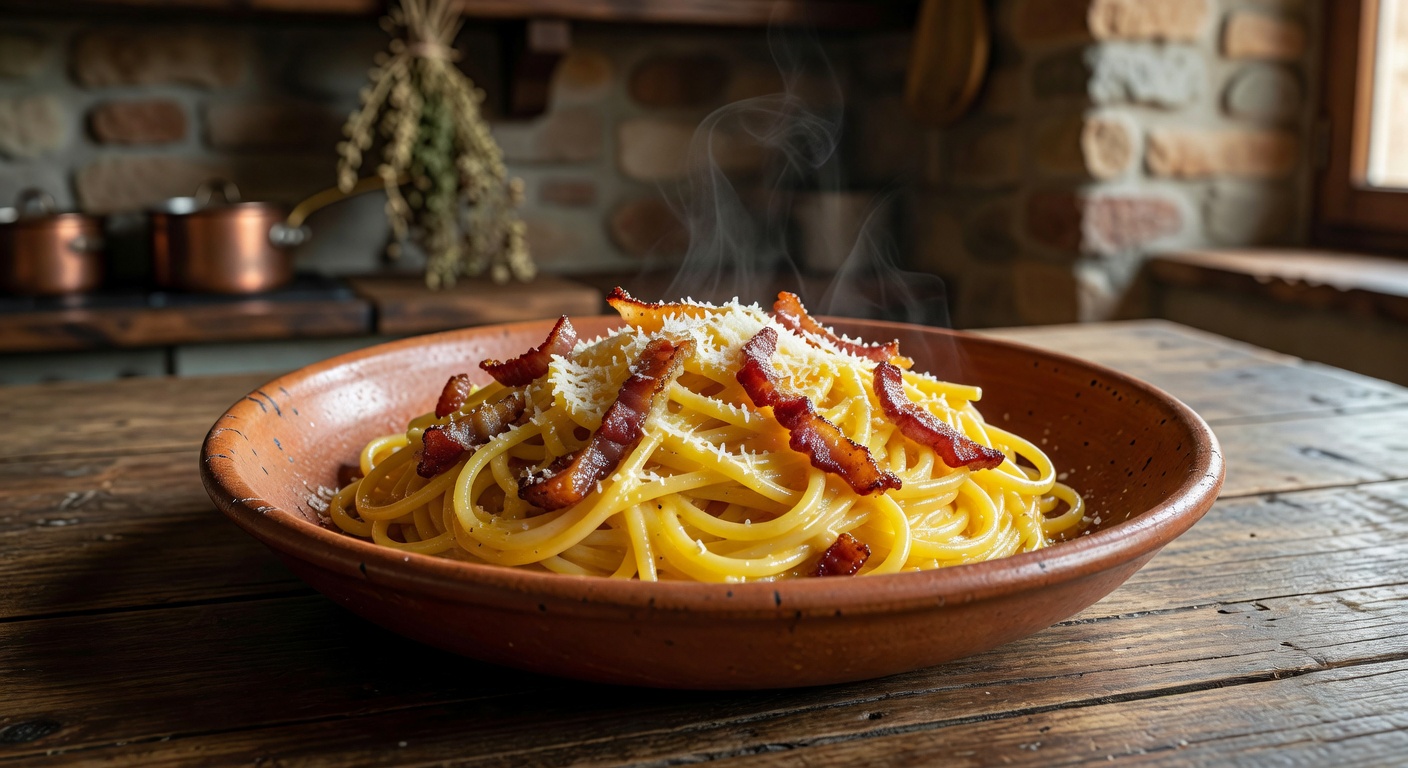
The iconic Roman pasta made entirely without heavy cream.
Carbonara is deeply tied to the city of Rome. The name is said to derive from "carbonaro," the Italian word for charcoal burner. Some believe the dish was made as a hearty meal for Italian charcoal workers. The authentic recipe relies on a silky emulsion of starchy pasta water, rendered pork fat, and egg yolks.
Never use heavy cream in a Carbonara! The creaminess comes purely from the emulsion of egg yolks, rendered pork fat, and starchy pasta water. Also, never add the eggs while the pan is on an active flame, or you will get scrambled egg pasta.
Serve immediately while the sauce is hot and creamy. A crisp white wine like a Frascati Superiore cuts through the richness of the guanciale perfectly.